Consider audience interaction and participation.
This has existed for over 50 years in parallel to cinema in the form of video games, though that art form has missed the meditative storytelling of cinema.
Liquid Cinema is a liquification beyond what is just light in the camera at the moment of capturing the images.
It's a prism which gathers images, sounds from all directions and invites the audience into a new world they may exlore.
It's about creating extatic storytelling using new mediums and technologies available to us which may be common outside of cinema.
It is about the rejection of a static realistic image in favor of a liquid imaginative image.
Research Question
Classic Cinema Liquid Cinema
Participation
Individualistic
Collective
Images
Static
Liquid
Narrative
Linear
Non-Linear
Style
Naturalistic
Stylized
"How does Liquid Cinema affect the audience and how does it relate to documentary truth compared to Classic Cinema?"
I believe a linearly displayed film may yet be Liquid Cinema if it contains most of the listed ingredients. Like its philosophy it's not a strictly defined term, but a feeling that may apply to works in the spirit of it. Examples of pioneering works include Chris Marker's , and . Recent references include Stillz and Harmony Korine's which mixes documentary images with fictionalized characters interacting with a three dimensional fantasy and Gary Hustwit's which randomly generates its editing at each showing so that each audience gets a unique experience.
Particularly I'm interested in what interactive films would do to stories about our 'reality'.
Does it break what we read as a truthful documentary experience?
A new "Rethinking" chapter to the classic has a Final Notes section where Paul Schroeder tells of a new trancendental film experience he had. The film by Marta Fiennes morphs by an algorithm into mesmerizing new edits. I believe he is reflecting over similar ideas of where cinema may go. Only I believe, while we can be assisted by algorithms, it's preferrable that peoples dialogue with the film steers the way through the editing with the author as the recurring storyteller.
The Otherworld
This is the first project where I will make the film with Liquid Cinema in mind. The film concerns our relationship to storytelling and how mythical stories helped us respect and relate to nature. It consists of archive images, documentary images, animations and three dimensional worlds.
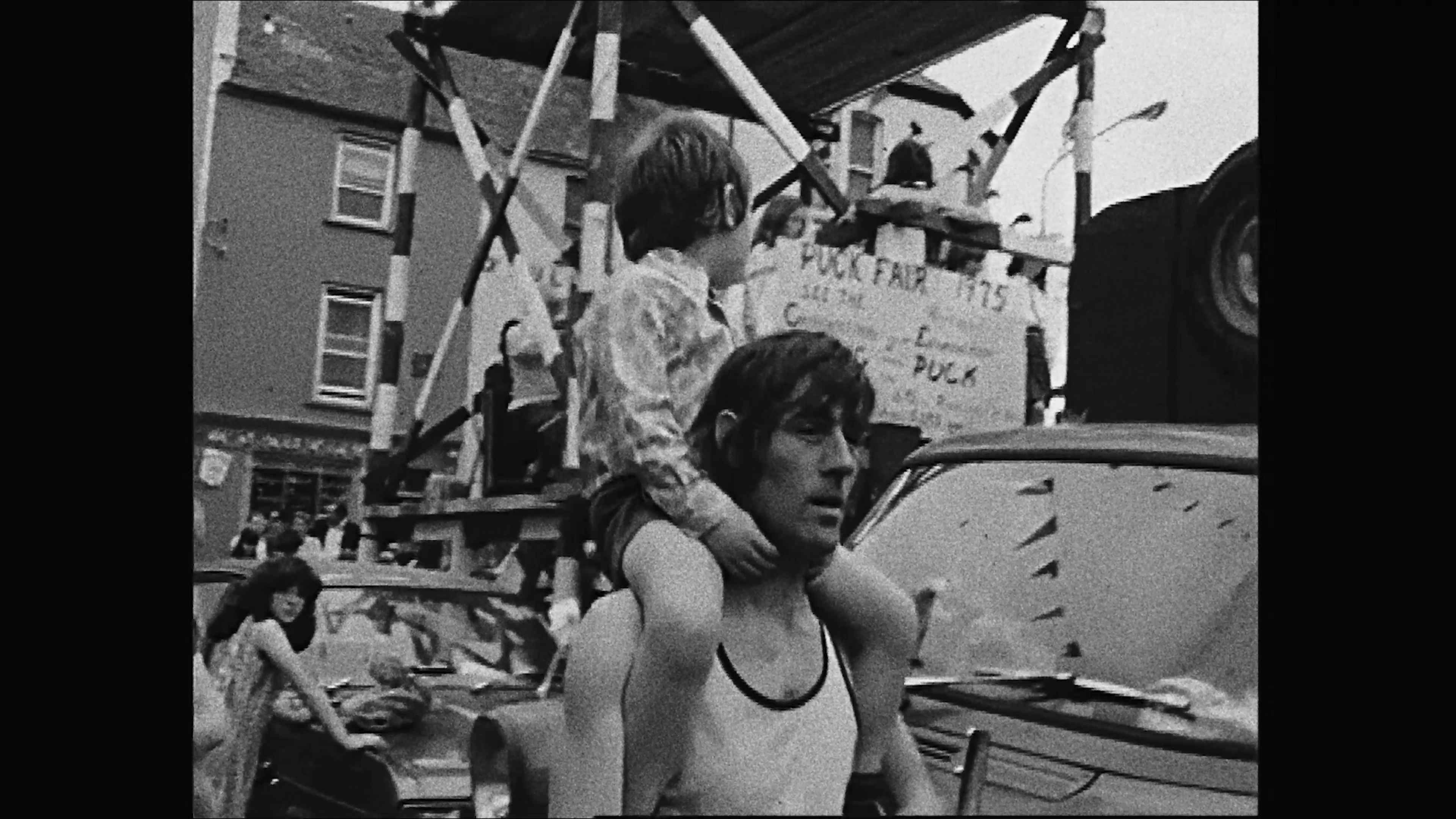
The Sky is a River
A work in progress feature documentary film I plan to adapt to be able to be displayed as a non-linear liquid cinema film as well.
Read more about the film here
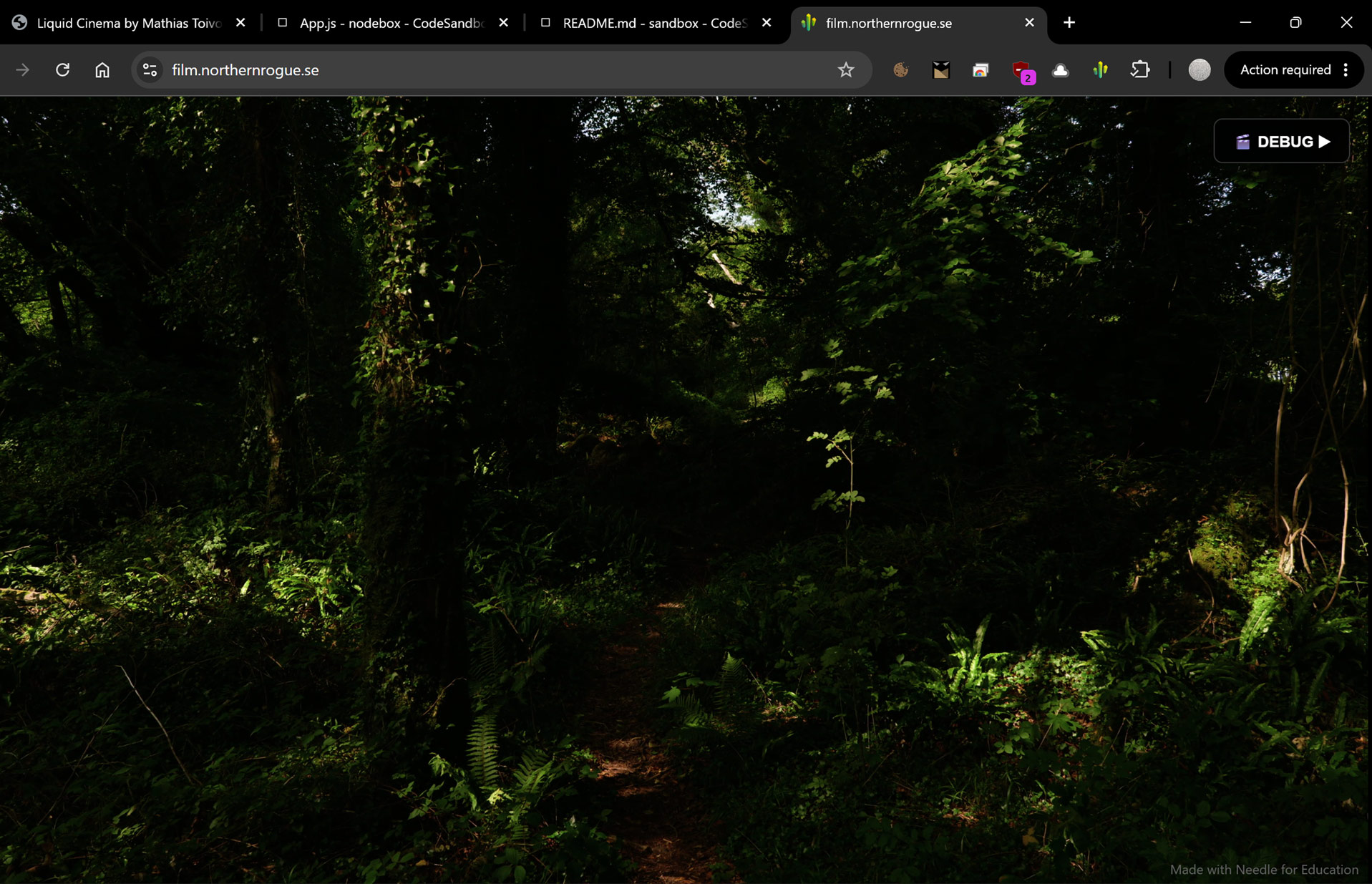
How to Display Liquid Cinema
I've created a web site where a web player can read interactive scripts and show films. These scripts which are written in YarnScript works like blueprints for how the player should display the film and which possibitilies exists for the audience to choose how the film should progress.
All the prepared film material is uploaded to the server, so the script assembles the film out of this material as the audience watches it.
Since I use a Needle Engine Three.js player inside the Unity game engine to create the website - any kind of material and computer generated graphics can be displayed and interacted with.
Initially it works like an interactive Netflix, but I plan to make use of all the new possibilities as well.
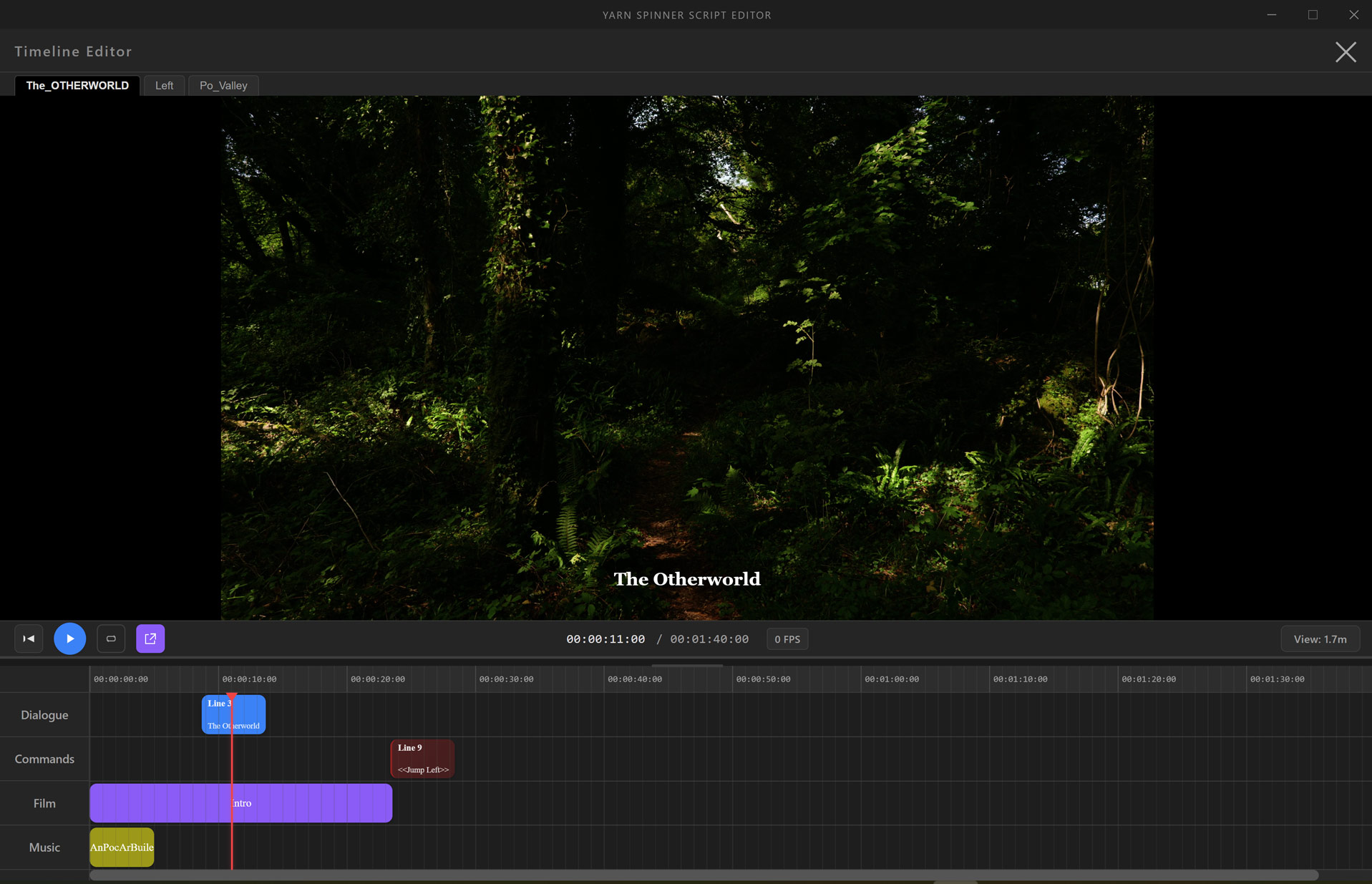
How to Write for Liquid Cinema
To write the scripts I made a YarnScript script editor which can also preview the film directly when writing it. It supports creating branching narratives depending on the choices of the audience which to start with is only left or right for simplicity.
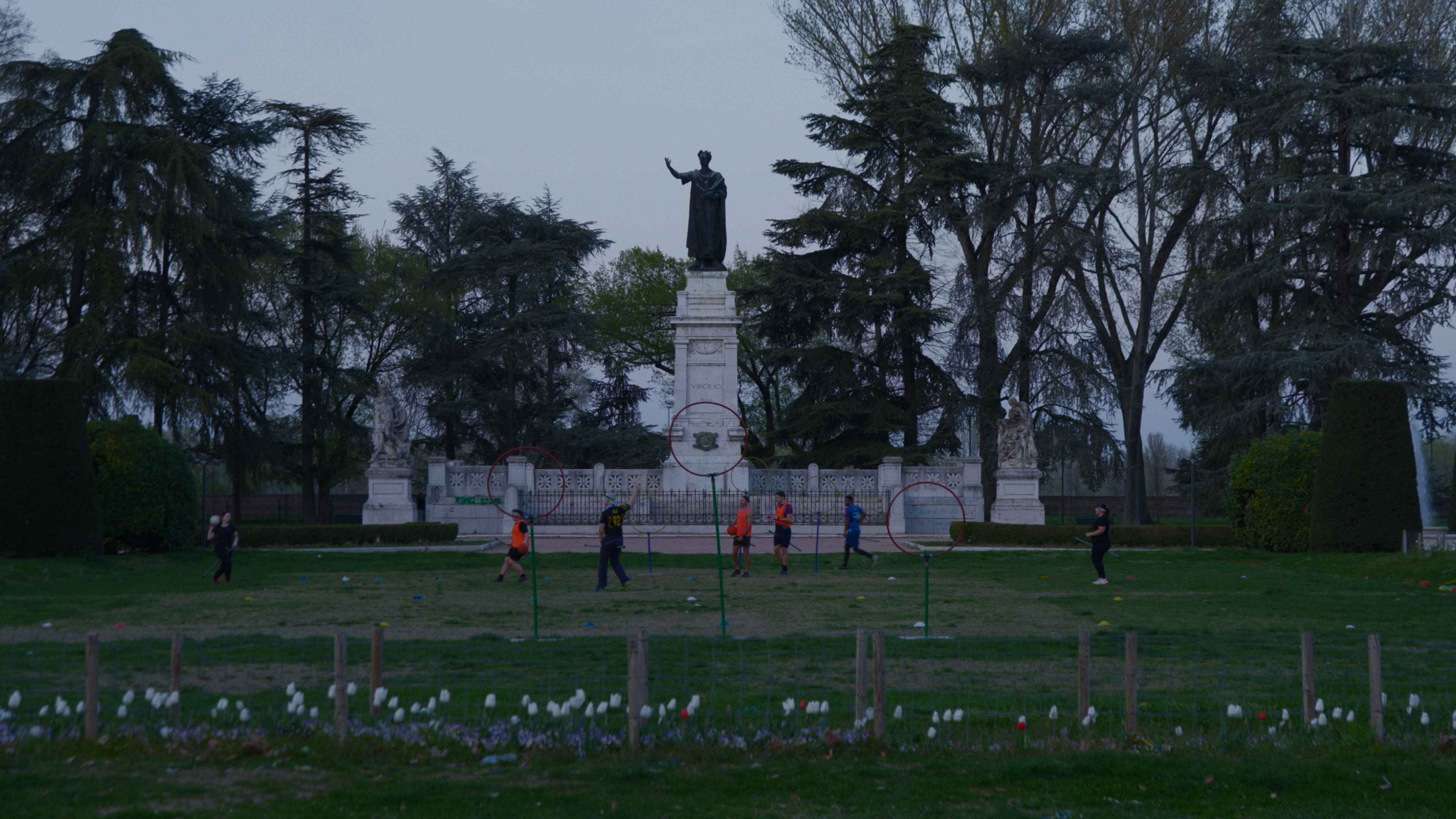
Social Liquid Cinema
How do we collectively control an interactive film when shown in a cinema?
This is yet a question I have't fully answered yet.
My first intuition is cinema through bodily movement. Since film itself is kinematic, to control it in it's own realm is intuitive. All other options becomes too techno focused, for example QR-Codes to scan to access a website on your phone, small controllers handed out, or it becomes too rowdy, for example through collective speech. It's essential that the audience remains in the world of the film. So I created a program named Detective which through a camera reads movement ques from the audience to get an average which is used to control the film. This is not possible in all cinemas, but more in 'live' like showings. This will be an initial experiment.
Gaussian Splatting
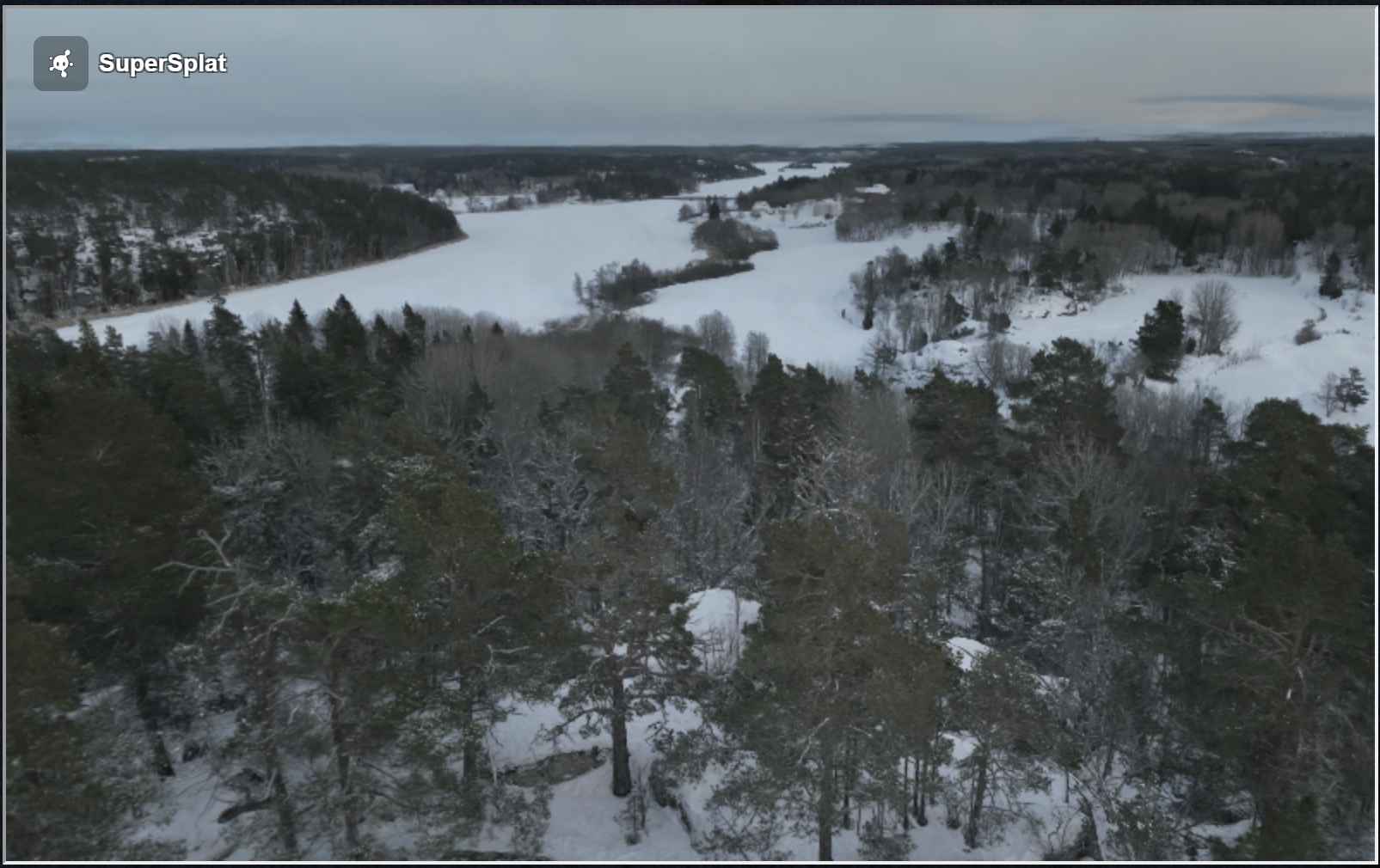
One new image technology called Gaussian Splatting allows for real places to be processed into a three dimensional scene which can be explored afterwards. Camera movements can then be captured in any way imaginable in for example Blender. The scenes consists of millions of painted lines which can also be used as an abstract style letting the camera float from abstraction.
It also seems great for exploring memories and the dissolution of the lines may create surreal scenes. Here is a first experiment into capturing a scene in this new way.
Ethical Considerations
William S. Burroughs
Film Directors have always had the privilege of one-way communication with and control of the audience. So what happens when we allow the audience to participate like in any engaging conversation with a friend? The control of the Director may give way for a dissolved hierarchy which allows the audience to find their own way through the experience.
I hope to tell Liquid Cinema stories which helps us seeing from new perspectives, both challenging the system and reflecting the critique in How it's shown.
Inspirations
Reflections on the Artistic Research course
GET DOWN AND PARTY TOGETHER immediately caught my interest as Adrian continued to tell us about her interactive workshops concerning funk music. I thought, "Interactive, Educating, Political, Participation" as I read about the Funk Lessons. This applies very much to my own research where I want to create dialogue, as Adrian put it: "Dialogue quickly replaced pseudoacademic lecture and social union replaced the audience-performer separation". Is this possible with documentary experiences in the same room as the screening?
Piper, Adrian. Out of Order Out of Sight.
I believe Walter Benjamin to be well in touch with his intuition of how the world works and we do subjectively project magical thoughts onto things, and the reproduction of images does go beyond representation because of our culture and history. I thought about Baudrillard's simulacra where a new reality is created for the thing, one that is virtual, and we may even prefer it. I do not agree that the thing itself has any agency like Styerl nears. This relates to the worldbuilding of my documentary work, where I believe the virtual reality is to be considered and explored in my storytelling just as much as the thing itself. I argue that a documentary can take place within a game engine, in fabrications where nothing is seemingly real, as long as the story is true and grounded. Bruce la Bruce seems to have understood this early on.
Styerl, Hito. A Thing Like You and Me.
A perfect one-way street is what I consider most Hollywood fiction films to be. What makes documentary experiences exciting is the cracks, the seams, the unfinished spaces where life, process, and improvisation exist. Like Bartas writes: "all the conflicts and contradictory voices that constitute a work of art". To hide the process is to forego much of the substance of art and its storytelling. I strive to not process material too much in order to enlighten the process itself. "Our enemies move at the speed of light", wrote the filmmaker Alain Tanner, and in my digital interactive film projects I am trying to meet them there, which means the process is to be a part of the experience itself.
Bartas, Magnus. You Told Me.
Strategy of Documentation
As I write, a strong wind batters my window and I think it is reflective of everything going on outside our windows today. Imagining Liberation imagines an intimate book of the journey of Dalia AlKury's storytelling with fantastic writing and images, and just like any good book I am swept away into a brilliant alternate reality which is grounded in the true tragedies and wonders of the world. The safety of reading it at home, at my pace, I like very much.
Though I would like to focus even more on the interactive and participatory possibilities of sharing a digital text with my own documentation. AlKury's science fiction worlds are completely within my realm of perspective on what storytelling could be, whether categorized as fiction or documentary, and her stories about her work feel very much alive with the inclusion of pages from her scripts and personal thoughts upon her process. This makes it feel less of a museum-curated text, and rather a text where we clearly hear her voice.
The short interludes of real life scenes, like when she showed her 3D worlds to Ethiopian Priests and their meeting of perspectives, is a great method. This text will remain close and inspiring to me, both because of her work and because of the political urgency.
AlKury, Dalia. Imagining Liberation.
Quotes
"Rarely has the world needed so much to be imagined" - Chris Marker
"How do we short-circuit control?" - William S. Burroughs
"Boredom is the dream bird that hatches the egg of experience. A rustling in the leaves drives him away." - Walter Benjamin
"Postmodern society sensoral and information overload which makes us passive. There is no place for activity. Things are projected onto us." - Jean Baudrillard
"The act of writing is already a virtual reality." - Jean Baudrillard
"Our enemies move at the speed of light" - Alain Tanner
"What's the use of talking about documentary films and fiction films, they are all just films" - Joe Bini
"I'm pointing out that reality is already so much crazier than anything one could possibly fictionalize." - Alice Bucknell
"These are my references, if you do not like them I have others" - Groucho Marx
Any creative spelling of words are intentionally left like that to show the manual work.
References
- AlKury, Dalia. Imagining Liberation
- Baudrillard, Jean. The Illusion of the End
- Schrader, Paul. Transcendental Style in Film
- Hustwit, Gary. Eno (2024)
- Marker, Chris. La Jetée (1962)
- Marker, Chris. Sans Soleil (1983)
- Marker, Chris. Immemory (1997)
- Piper, Adrian. Out of Order Out of Sight
- Stillz & Korine, Harmony. Barrio Triste (2023)
- Styerl, Hito. A Thing Like You and Me